Full Ride (Percussion Ensemble)
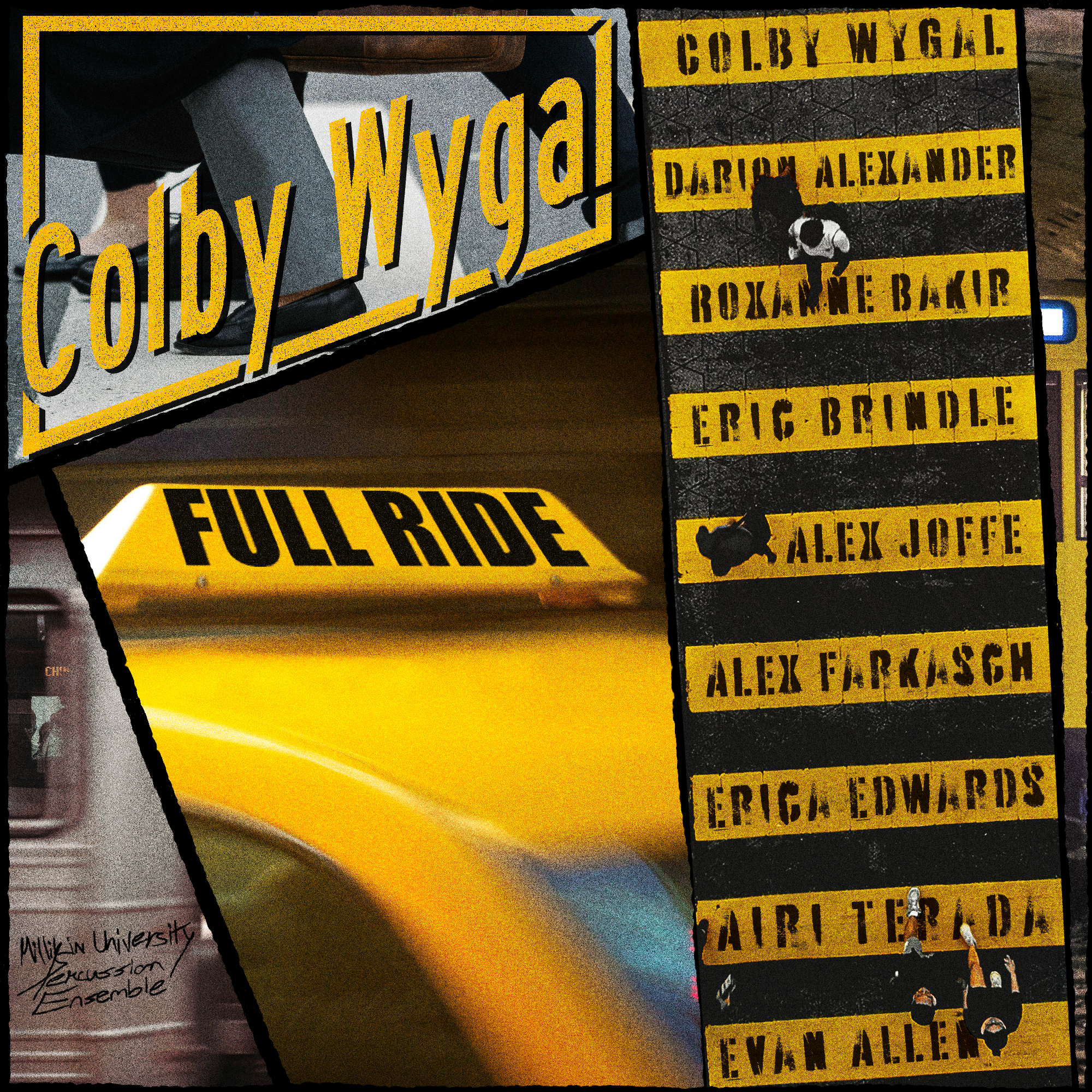
Full Ride Cover Art, digital image collage and graphic design
"Full Ride" is a jazz percussion octet that I composed for the Millikin University Percussion Ensemble in the Spring of 2025. The name of the piece is inspired by the rides I’ve taken through the dense, interwoven mosaic of urban transit. I’ve always been in awe of the way that an efficient transit network manages to operate seamlessly and predictably amongst the chaos of big city traffic. The comfortable grooves found within the chaos of the piece’s unbalanced 7/8 time signature are designed to evoke feelings of rapid travel through a multimodal transit system. One section may feel like a hurried taxi ride during rush hour, while another may be more akin to a relaxing train ride home. All of these unique ideas combine into one continuous auditory journey through an imaginary city.
As the culmination of months of painstaking notation and years of musical experience, “Full Ride” was my first composition to see the public light. Like the vast majority of my musical endeavors, this was an entirely self-guided venture. I worked independently of my university’s curriculum and schedules, giving myself absolute freedom while also demanding strong internal motivation to keep moving forward. Being an arts technology student with no formal music theory education, I worked outside of most formal conventions and “rules” of modern music composition, relying entirely on my instincts and intrinsic understanding of music to create something that felt uniquely me. I then worked with Dr. Jeremy Brunk, director of the Millikin University Percussion Ensemble, to discuss my composition and workshop small adjustments. The first official draft of the composition was then presented to my peers in the ensemble, and rehearsal began shortly after. Adjustments were continually made for readability and quality of life throughout the rehearsal process.
“Full Ride” premiered to the world on February 15, 2025, during the Millikin University Percussion Ensemble’s annual Synergy concert. The piece was a resounding success, being an immediate favorite among performers and concertgoers alike. Due to its popularity, the piece was programmed twice more before the end of the academic year—once in the annual Millikin Percussion Winter Workshop and once in a joint concert between the percussion ensemble and the Millikin Symphonic Wind Ensemble.
Studio Recording
Following a successful run of performances, I sought funding and approval to record “Full Ride” in Millitrax Studio A on Millikin’s campus. I spearheaded the effort, working closely with ensemble members and percussion faculty to schedule equipment moves, performer timeframes, and engineering staff to record the piece. The bulk of the composition was recorded over a single weekend with a total of 16 hours of studio time booked. I served as the producer and ensemble director for each of these sessions, as well as being the head studio engineer when I wasn’t performing. As part of assembling a schedule and session plan, I workshopped microphone choice and placement in advance and worked quickly to maximize our time in tracking all 8 parts. I recruited assistant engineer Mackenzie Mann to help with setup and tracking during each session to ensure the process went as smoothly as possible.
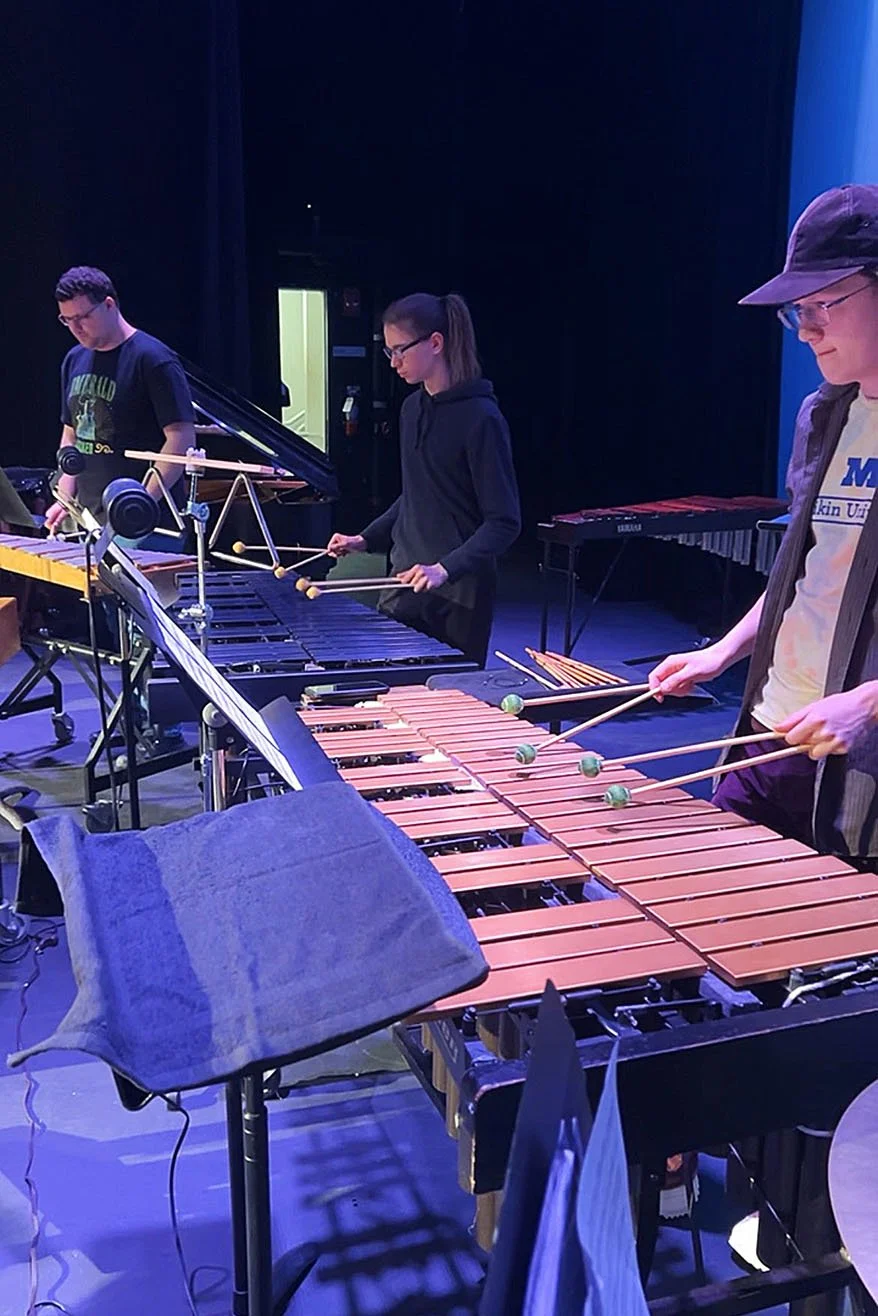
Millikin University Percussion Ensemble rehearsing “Full Ride” prior to its Synergy premiere.
The piece itself is quite complex and challenging, even at a collegiate level, so there were many hiccups and setbacks in the process. I had to make on-the-fly decisions, opting for unconventional recording techniques, overdubbing sections with stand-in performers, and adjusting our schedule to ensure the highest quality recording in the most important parts. It marked the greatest challenge I faced in my early career as a recording engineer, but I saw many triumphs and developed my skills in the process.
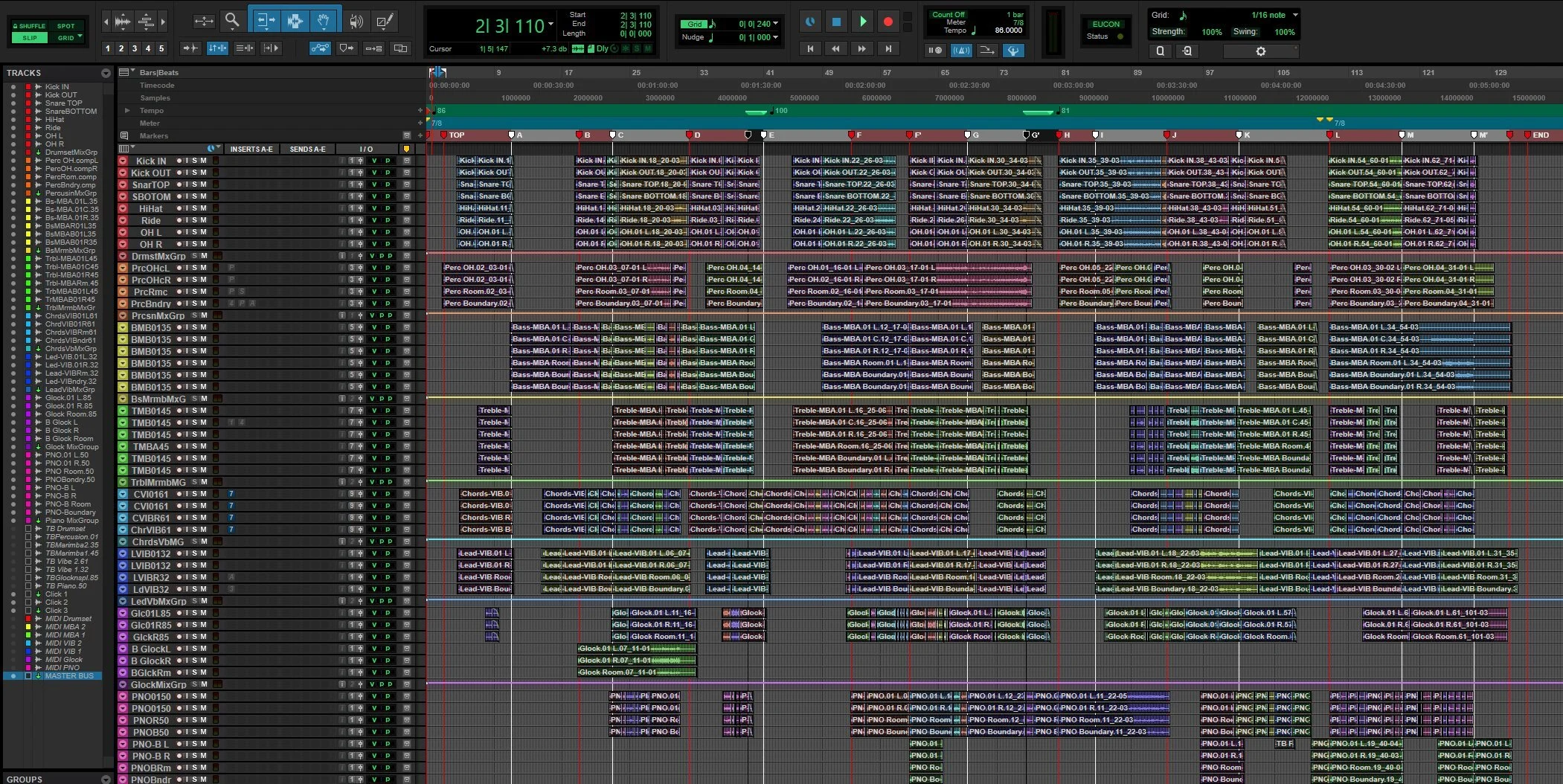
After a long and arduous recording process, my work was still far from done. The task of compiling takes, processing input sources, and creating a cohesive final mix would take countless hours of exhausting work. Looking back, my recording strategy was far more maximalist than it ever needed to be. Each instrument had anywhere between 4 and 8 microphones placed to capture the sound source. This was my first percussion ensemble recording, and I was uncertain of what would sound best. In my uncertainty, I opted for large-scale blanket coverage, assuming that if one microphone didn’t sound right, another certainly would. While this plan did provide the options I needed and certainly saved me in a few scenarios when a microphone failed in one way or another, my strategy had the downside of drastically increasing the time I spent mixing. As I’ve grown as a studio engineer, I frequently opt for a narrower, more intentional approach, in which each microphone has a deliberate purpose, and additional “safety” microphones are unnecessary due to absolute confidence in the setup. In total, the Pro Tools session for “Full Ride” (seen below) had 46 unique audio tracks. These were eventually mixed down to 8 stereo groups, one for each instrument, and finally compiled into a final mix of the entire ensemble. The process was riddled with complications and setbacks, and I operated on a very delayed schedule due to academic obligations and limited access to necessary software when off campus. However, I eventually reached a final product that I was satisfied with.
Artwork
As I neared the end of the project, I began revisiting the vision that I created for the initial composition. I took myself through the imaginary city streets and felt the transfers of energy throughout each distinct section of music. Using the images I formed in my head, I began constructing the cover art for the piece. I collaged photos of city streets and public transit, everything vibrant and in motion. I used a combination of fonts and hand-lettered text, some resembling signs on American highways and others resembling spray-painted letters and freehand graffiti. Overall, I managed to perfectly encapsulate what this piece feels like to me in this one image, and that final touch brought the entire project together as a cohesive package.
Conclusion
Looking back, “Full Ride” was one of the most formative successes in my collegiate years, and it absolutely changed the trajectory of my career. This would be the first of many percussion compositions I would write for the ensemble, and I began directing more focus and care to my instrumental music skills outside of the studio. The critical success of the piece was one of the key milestones in my work that was credited to my earning the Scovill Award—Millikin University’s most coveted award, dedicated to students with incredible academic prowess and prominent interdisciplinary work and leadership. Percussion ensemble repertoire will always hold a special place in my heart, and I’m honored to have been given these opportunities to pursue my passion at Millikin University.
Performance Credits:
Vibraphone 1 (lead): Eric Brindle
Vibraphone 2 (chords): Alex Joffe
Marimba 1 (bass): Roxanne Bakir
Marimba 2 (treble): Airi Terada, Erica Edwards
Glockenspiel: Evan Allen, Alex Joffe
Drumset: Darion Alexander
Percussion: Colby Wygal
Production Credits:
Composer: Colby Wygal
Producer: Colby Wygal
Head Recording Engineer: Colby Wygal
Assistant Recording Engineer: Mackenzie Mann
Mixing Engineer: Colby Wygal
Cover Art: Colby Wygal
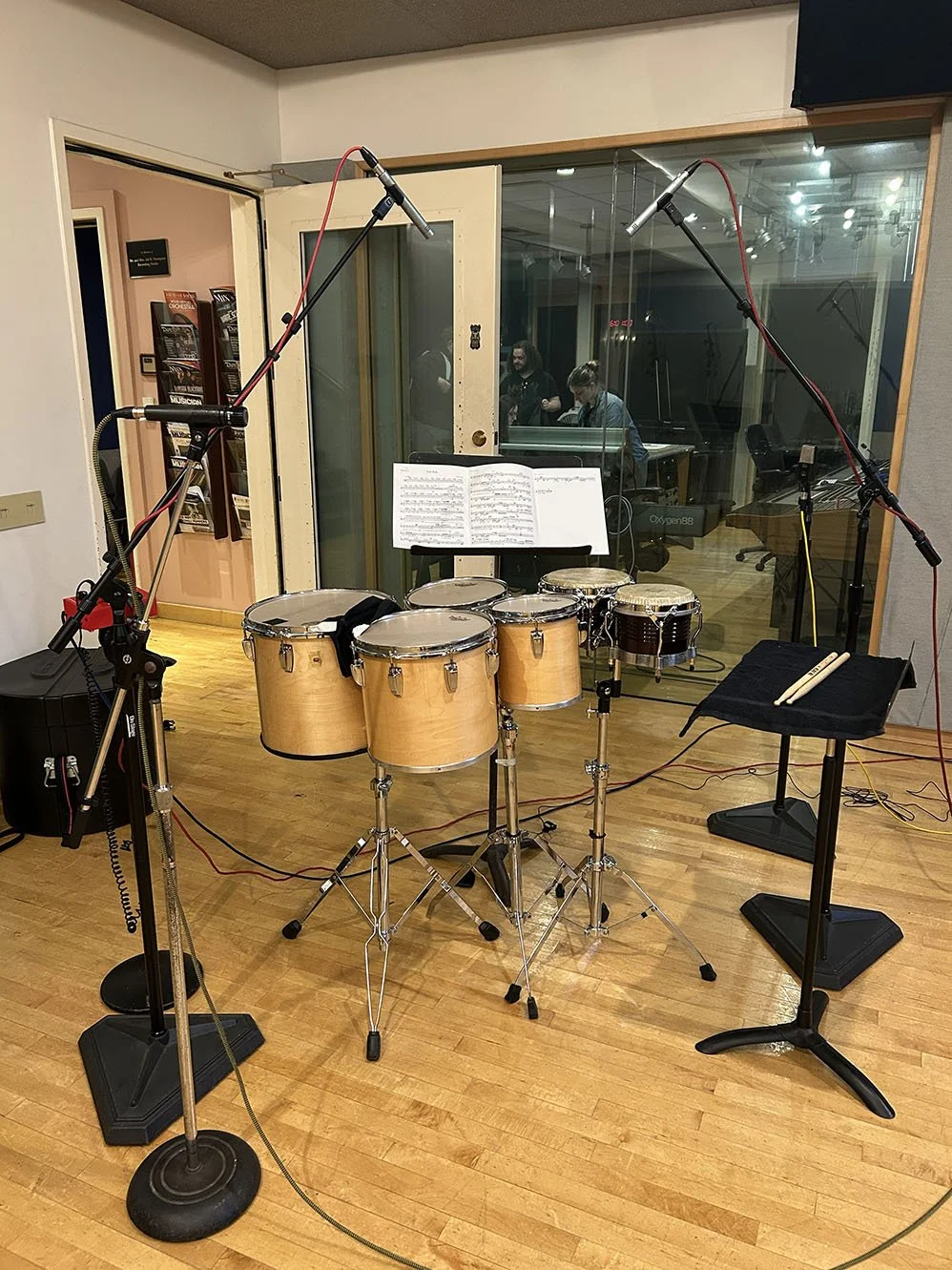
A multi-percussion setup in Millitrax Studio A prepared for recording.