
The Trash Stalker
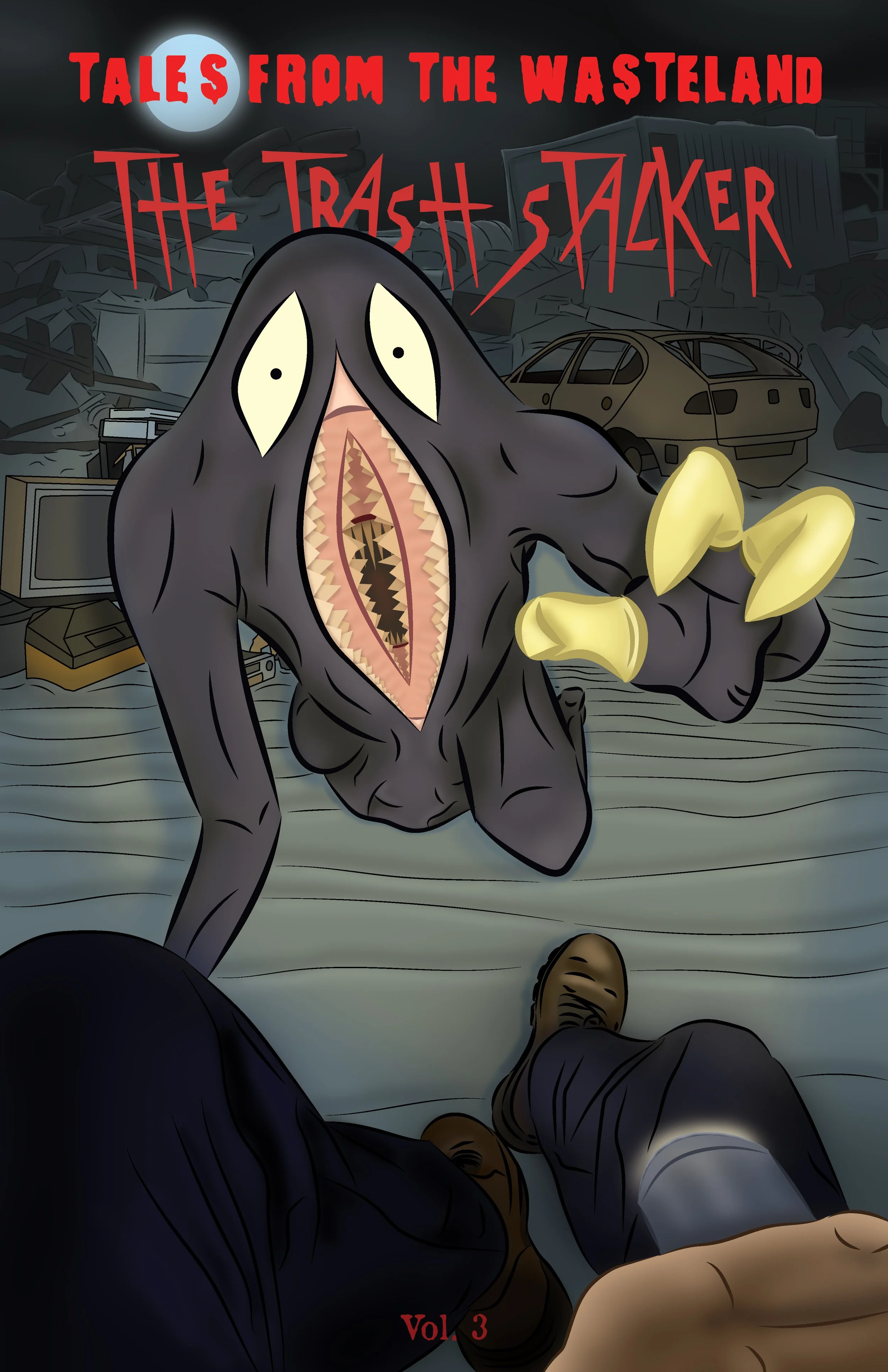
Rendered comic poster of the Trash Stalker character, illustration
The Trash Stalker was my first fully realized character design in my collegiate career. It was a daunting task, demanding illustration and rendering skills that I wasn’t yet fully confident in. To ease the process, I opted to design a creature that was human enough to feel familiar, but alien enough to give me the liberty of workshopping a unique and artistically achievable anatomy from the ground up.
I approached my design with world-building at the forefront. As I sketched out ideas, I consistently asked myself questions about the creature and the world it inhabits. Why does it have these grotesque, exaggerated features? How did this creature come to be? Where does it live? How does it survive? What are its habits? I could have simply answered all these questions of “why?” with a surface-level “because it’s scary.” That was, after all, the basic goal of this design process. But by looking deeper, I managed to create a more convincing and terrifying design while also telling a story through the world I built.
The Trash Stalker is a nocturnal, carnivorous beast that inhabits the radioactive junkyards of a post-war Europe. Following the bombings, it’s believed that the harsh environmental transformation caused Russian brown bears to rapidly evolve into these deformed monsters over several decades of radiation exposure. The creature hunts its prey by hiding among piles of garbage, detecting any movement with the highly sensitive hairs on its back. It then stalks its prey, using its long, four-jointed appendages to silently creep through the uneven terrain. When the moment is right, the Trash Stalker pounces on its prey, eating the unsuspecting animal alive with its gaping maw.
Following a lengthy ideation phase and the production of a rough sketch, I began working toward a full illustration. The first step was transforming my sketch into clean linework. This process was completed in Adobe Illustrator. In some areas, the process was as simple as retracing my sketch with neater lines, paying extra attention to line weight and density to create depth and form. Other parts involved complete redesigns and additions that never appeared in the rough sketch. The poster, for example, required realistic depth and perspective that I couldn’t envision on my own. For these sections, I shot reference photos, using myself and a friend as body doubles for the creature and the person seen in the poster. The person’s body is a near-exact outline of my body, adjusted at points to better match my vision. On the other hand, the Trash Stalker was outlined with my friend acting as a pose reference that I used to get perspective and depth. I attempted to draw the creature’s anatomy onto this reference to create a realistic sense of space. Much of the background in the poster is a dense collage of reference images from various royalty-free sources, traced and compiled to build a realistic world.
I then spent several days coloring and shading these outlines, making sure to highlight all the grotesque details and build a more convincing sense of depth and light. The design was split into three posters. The first two were orthographic reference sheets, highlighting the full design from three angles and depicting its core poses and mannerisms. The third was a fully rendered character poster, featuring dynamic poses, realistic lighting, and a detailed background. This was by far the most difficult to create, as it tested my full understanding of my character’s anatomy and required the highest level of detail. I topped off my worldbuilding in this poster by reimagining it as the cover page for a comic book entry in a series about the fictional world I had built.
“In a future ravaged by nuclear war, miles of wasteland have been abandoned and left as massive unkempt junkyards. Decades after the first bombs fell, groups of scavengers and exiles began telling stories of horrifying creatures stalking the trash fields and hunting humans and large animals that venture too deep into the wasteland. It is said that these ‘trash stalkers’ will spend hours or even days lying perfectly still within piles of debris, using their thick, highly sensitive hairs to detect any movements around them as they wait to stalk and pounce on their unsuspecting prey. Birthed from nuclear devastation, the elusive trash stalker is a highly effective killing machine and yet another dire consequence of humanity’s failings.”
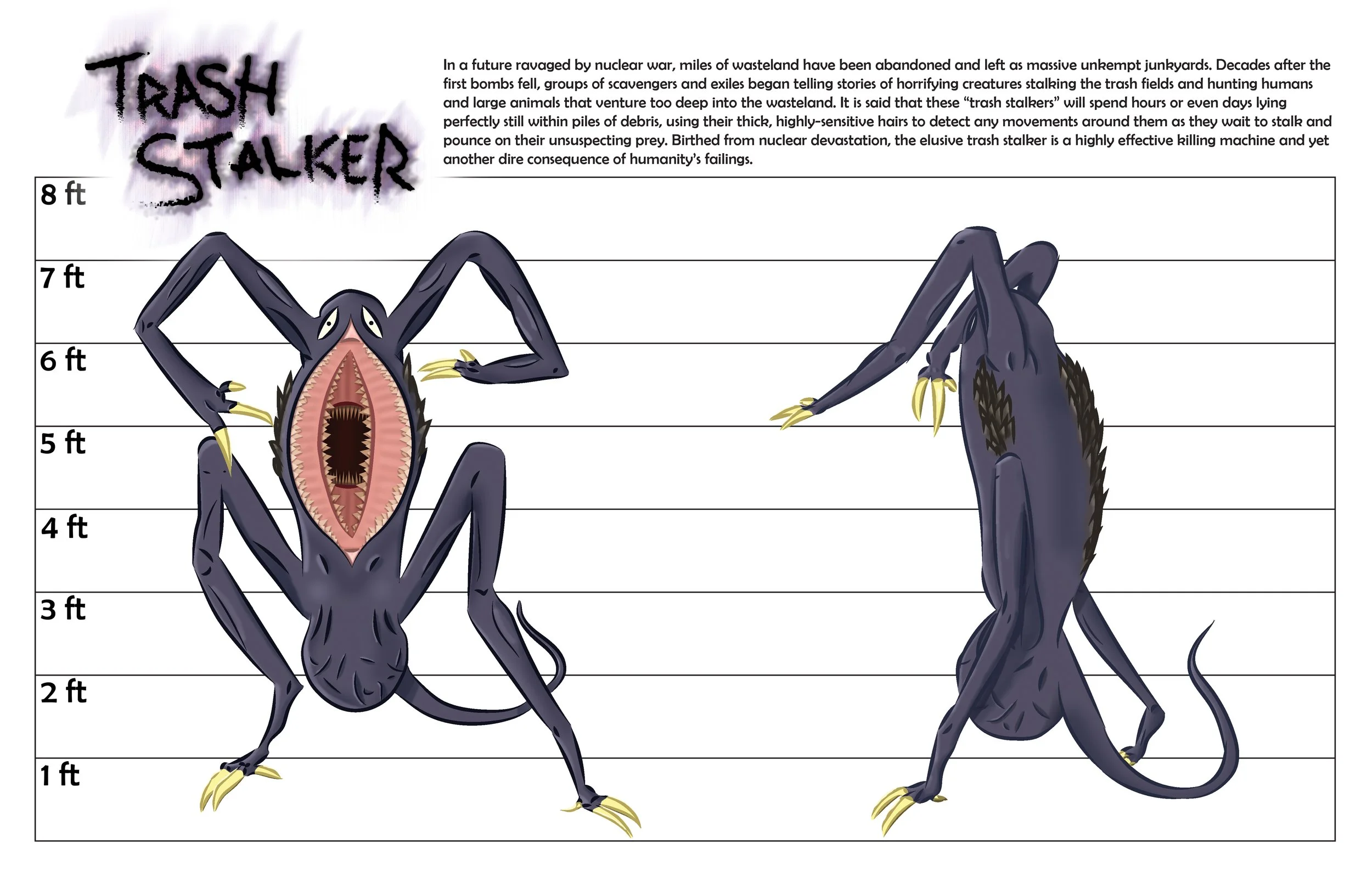
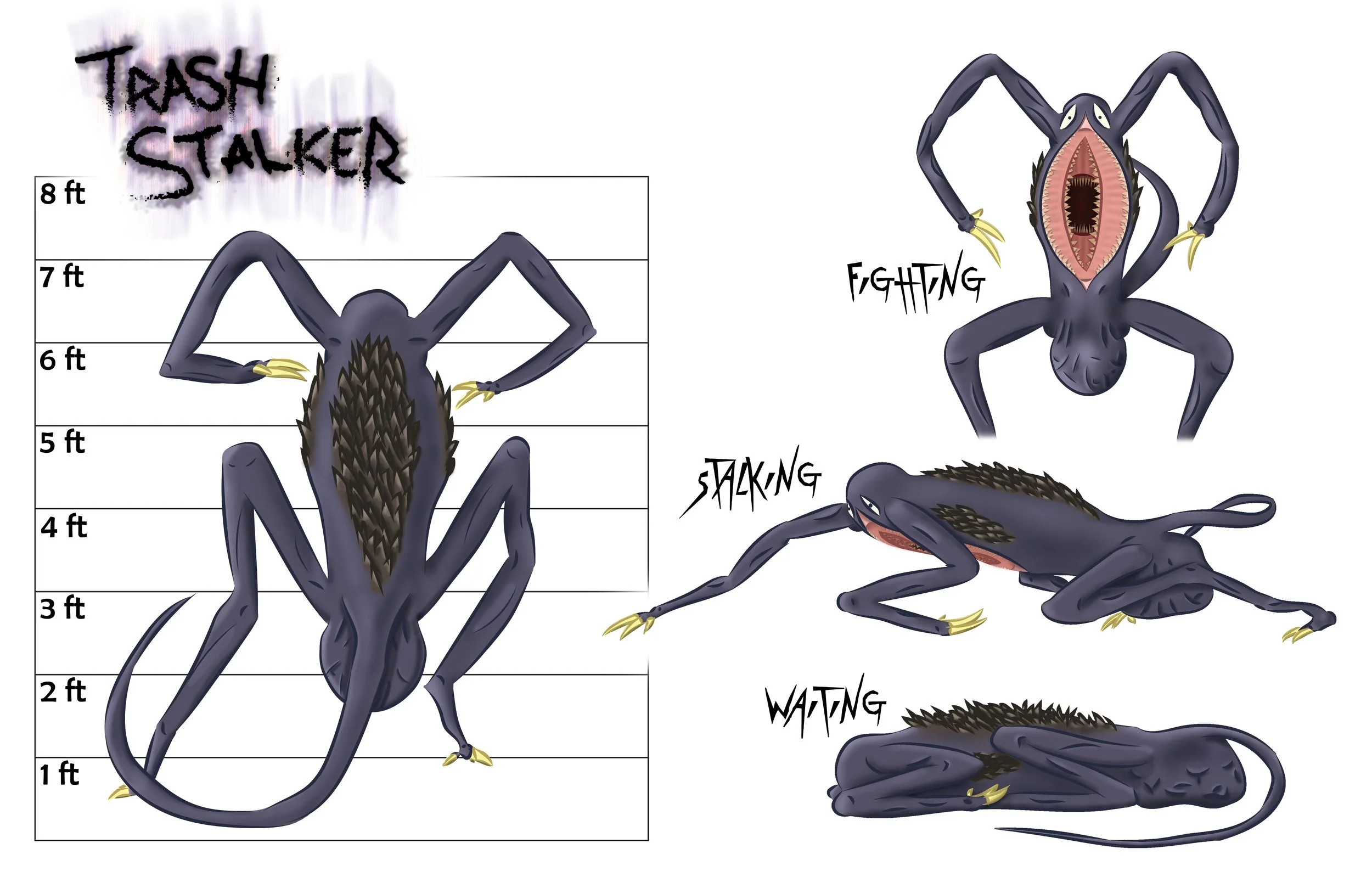
The Trash Stalker: Behind the Scenes
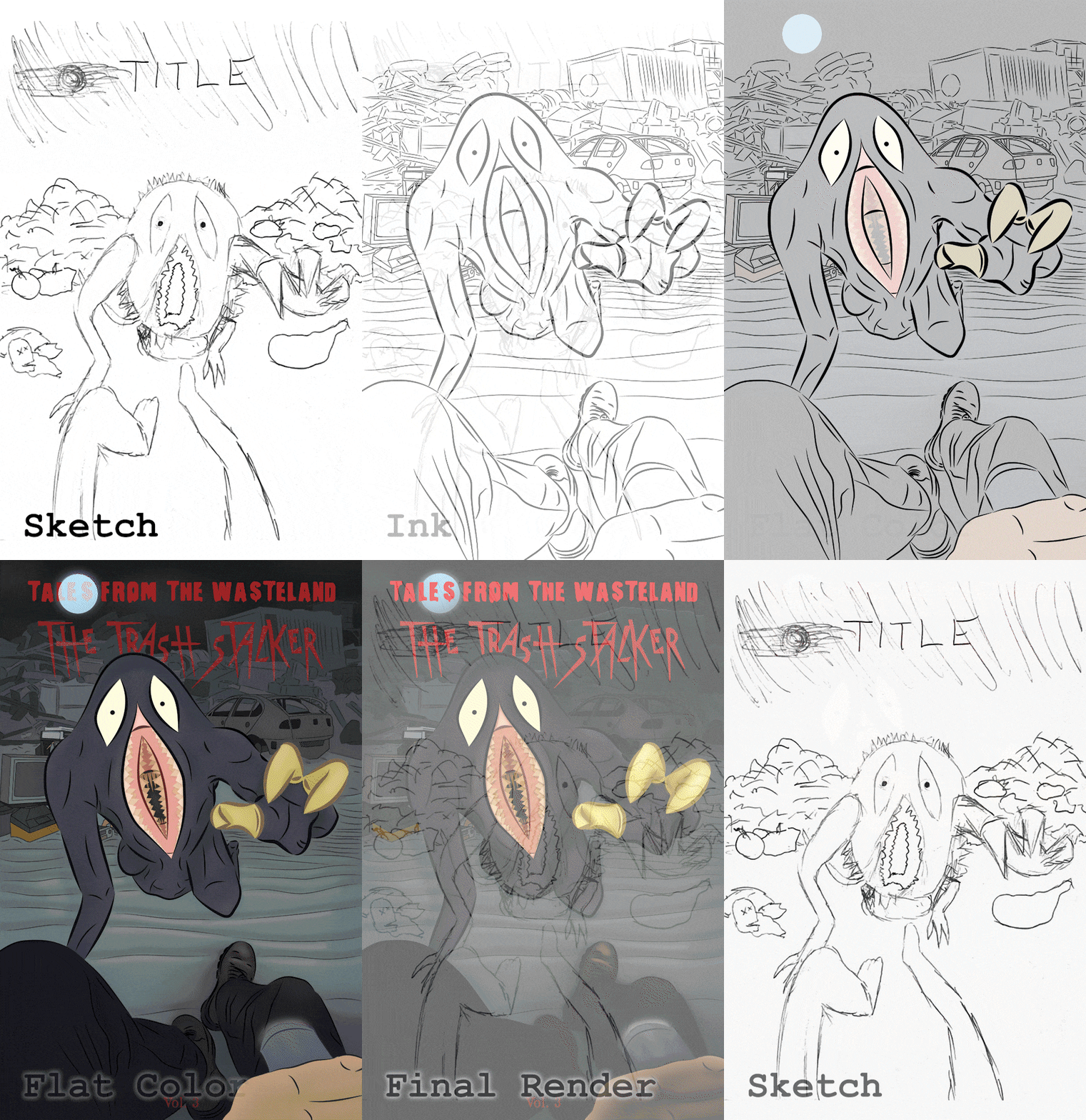
Visual progression of the Trash Stalker poster rendering, illustration and animation
The journey from sketch to final render is incredibly lengthy and challenging. Each step of the process requires unique skills and tactics. Initial sketching demands a cohesive vision and strong composition skills. Linework requires a solid understanding of perspective and depth, and has a major impact on the level of detail in the final render. Coloring relies on a deep understanding of color theory and needs proper attention to printing limitations to ensure the final artwork looks clean on paper and on the screen. And rendering/shading takes all of this preparation and design work and finally brings the vision to life. Failure to complete any of these steps properly would be a failure of the entire piece, leaving it flat and lifeless. I spent countless hours, days, and weeks ensuring that every detail was well thought-out and cohesive. Take a look at the many milestones in my progress toward creating this final poster!
